 1 day ago
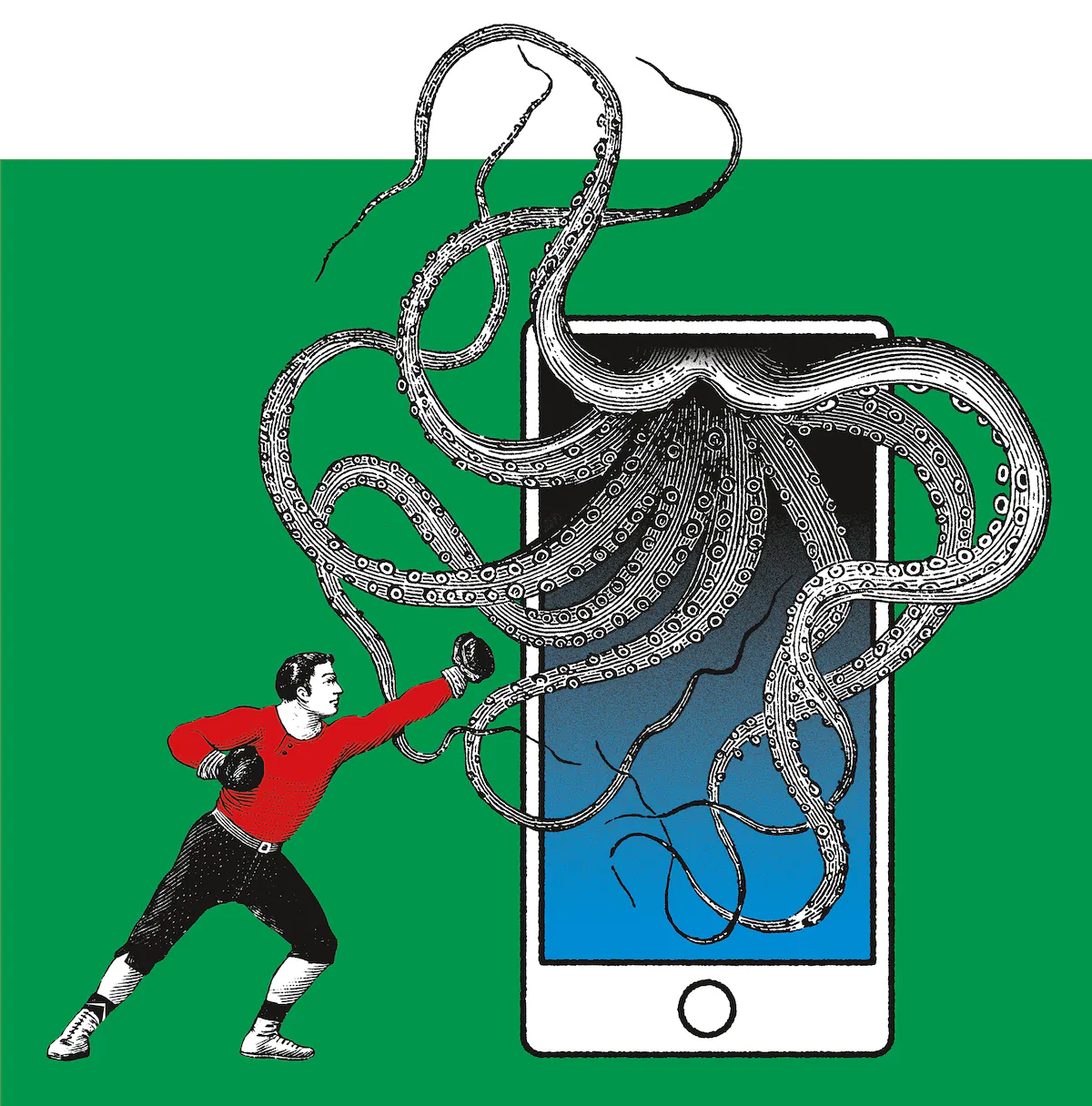
From the comfort of my desk, I can see it all. A series of webcam feeds show the sun setting over Tel Aviv and southern Lebanon. A world map, dotted with red markers, indicates that most of Europe and the Middle East are on “high alert.” I toggle a button on the map’s control panel, and the globe instantly displays the locations of undersea fiber-optic cables. Below the map, a live Bloomberg TV feed runs with the chyron Oil Extends Rout on Stockpile Talks. Scrolling down, I encounter walls of headlines grouped into categories like “World News” and “Intel Feed.” A “country instability” meter clocks Iran at 100 percent, while another widget reports the world’s “strategic risk overview” as “stable” at 50, whatever that means.
I am looking at World Monitor, a website that transforms any browser into a makeshift situation room, and I love it. Designed to resemble a cross between a Bloomberg terminal and a big screen at U.S. Strategic Command, the site aims to display as much information about world events as possible through an array of real-time feeds. This is information overload presented as intelligence.
World Monitor was built over a single weekend in January by Elie Habib, an engineer based in the United Arab Emirates and CEO of Anghami, one of the Middle East’s largest music-streaming services. “I wanted to extract the signal from the noise,” he told me recently. But what he really created, by his own admission, is a noise machine. Currently, the site pulls in more than 100 different data streams, including stock prices, prediction markets, satellite movements, weather alerts, major airport flight data, fire outbreaks, and the operational status of cloud services like Cloudflare and AWS. The information is all real, but what exactly a person should do with it remains unclear.
When Habib posted about the project on X, he was stunned by the response. At one point, tens of thousands of people used the site simultaneously; over 2 million accessed it in the first 20 days. Habib’s inbox filled with requests for new features and messages from venture capitalists interested in turning World Monitor into a full-time business. Via GitHub, where Habib made the code open-source, developers have made thousands of custom tweaks and translated the site into more than 20 languages.
Obviously, people want immediate information on the conflict in Iran and the geopolitical and economic fallout from the war. But the site’s popularity stems from something else as well. For the past year or so, extremely online communities—news junkies, day traders, social-media addicts, amateur investigators, and productivity hackers—have embraced a meme about “monitoring the situation.” The phrase originates from a 2025 viral X post showing a muscular, arms-crossed, headset-wearing Jeff Bezos watching a Blue Origin launch: “The masculine urge to monitor the situation,” the caption reads.
Like most memes, most situation-monitoring posts are ironic. They mock the self-importance of the phenomenon. (“He’s not unemployed, he’s monitoring the situation,” reads one typical example.) Most posters offer a playful blend of two perspectives: This is loser behavior and Dudes rock. World Monitor has thrilled this crowd, inspiring fans to post things like “BREAKING: you can now turn your laptop into a CIA command center.”
But this year, the monitoring jokes have taken on a different tone. The fog of the Trump administration’s wars has created an information vacuum quickly filled on social media. Some people populating the world’s feeds are doing valuable work—journalists and open-source intelligence gatherers confirming events and producing original reporting. But they are outnumbered by propagandists, trolls, anxious commentators, war-market gamblers, and clout chasers who apparently became experts on the Strait of Hormuz overnight. These people post things such as “Hey babe, wake up, they just dropped a new war monitor.” They aren’t just monitoring the situation; they’re constantly posting about monitoring the situation.
Read: This is what it looks like when nothing matters
Treating war like entertainment seems a logical extension of X, which has lost some of its real-time news utility since Elon Musk took over, alienating many former users and encouraging an army of edgelord users who treat the site like a 4chan board. (And people used to complain about the absurd ways cable-news hosts filled 24 hours of coverage.) The meme points to something bigger: a culture with an insatiable need for instant information on everything at all times. We live in saturated information environments powered by constant connectivity and on-demand services—Google, Wikipedia, chatbots. But this also acts as a defense mechanism in an era of real chaos, when overlapping crises and technologies make the world feel unknowable and hyperreal.
The prevailing feeling of 2026 is that too many consequential events are happening too fast for most people to follow, let alone understand. The United States invaded Venezuela and captured its leader, Nicolás Maduro, 69 days ago. Renee Good was killed by an ICE agent 66 days ago; Alex Pretti was killed by state agents in Minneapolis 49 days ago. The last tranche of the Epstein files—millions of pages documenting Jeffrey Epstein’s connections to powerful people—came out 43 days ago. It’s been 22 days since the Supreme Court struck down Donald Trump’s tariffs. On February 4, a pseudonymous account believed to belong to an OpenAI employee snarkily commented that “Anthropic has the same level of name recognition among Super Bowl viewers as literally fictional companies.” Now the company is embroiled in a massive fight with the Pentagon; its CEO is on the cover of an upcoming issue of Time. Yet most of these events have been overshadowed by a war in Iran that the administration has barely attempted to justify.
This is partly a consequence of our evolving information ecosystem, where more information is created across more feeds and new products like chatbots. Also, Trump’s reckless and erratic presidency has accelerated reality to online speeds. As my colleague David A. Graham put it, the administration “can’t say why the United States went to war with Iran, and it can’t say what the goal of the war is. Now it can’t even decide whether the war is still going on.” The absurdity, lack of pretense, and senselessness feel fitting for the current age; as writer John Ganz recently wrote, the war with Iran is “the first war that feels like it’s been launched by A.I: It’s all been done on a level less than thought.”
Monitoring is a reasonable response to all this: it seems to offer a sense of agency. “They feel in control,” Habib told me when I asked why people like World Monitor. “They see everything happening in front of them, and it’s like, you know, watching a Bruce Willis movie.”
Yet this response to information overload is warped in its own way: people demand new news and commentary every time they refresh a feed. Taking even a short break can be disorienting when trying to rejoin a discourse that feels ever more self-referential and intense. The Trump administration itself exemplifies this dynamic: earlier this week, the official White House account on X published a video superimposing footage of military bombings in Iran onto the 2006 Nintendo game Wii Sports. The account regularly posts content like this—outraging some and delighting others; publishing more of it advances the meta-discourse layered atop the actual news, drawing attention away from the unfolding conflict itself. Because in reality, your attention can only catch on to so much.
Read: Believe your eyes
This kind of thing happens everywhere, constantly. If you’re not on World Monitor, you may be in one or multiple social feeds, trying to decide which articles to read on a cluttered front page, which newsletters to open, or which podcasts to listen to at 1.3-times speed to get to the good parts. The effect isn’t necessarily feeling more informed; if you’re anything like me, you probably feel alienated or worse. Those trying to keep up with the news cycle in 2026 are awareing themselves to death, as writer Geoff George put it.
This situation recalls another grotesque online phenomenon: “gooning.” For the uninitiated, gooning is when maladjusted young men consume immense, overstimulating amounts of pornography and masturbate for hours to reach some transcendent release. The comparison may sound absurd, but as Daniel Kolitz wrote in a recent Harper’s article about the subculture, it mirrors the hyper-online monitoring behavior described here:
What are these gooners actually doing? Wasting hours each day consuming short-form video content. Chasing intensities of sensation across platforms. Parasocially fixating on microcelebrities who want their money. Broadcasting their love for those microcelebrities in public forums. Conducting bizarre self-experiments because someone on the internet told them to. In general, abjuring connective, other-directed pleasures for the comfort of staring at screens alone. Does any of this sound familiar?
The internet now encourages bingeing as default behavior: watching whole TV seasons at once, watching every football game simultaneously in quad-box fashion. We’re prompted to keep talking to chatbots for answers or companionship; to let AI agents accomplish task after task until we’ve built a website in an hour; to obsess in relentless fandoms or dive down rabbit holes. Total bombardment is partly surrender to the internet’s logic and algorithms—a kind of attentional death where a person is no longer overwhelmed because they have given up. It can also be seen as an attempt to hold footing as the zone floods with noise. Because everything is happening too much, too fast. More.
There is a cost: a flattening of every event, feeling, and piece of art, commerce, joy, and suffering into the same atomic unit of attention, all easily replaced by what comes next. The worst, most shameless people already understand this and use that cold logic to their advantage. You don’t need to justify a war if you believe people will ultimately lose interest and move on to the next outrage.
I have suggested before that our information ecosystem is broken. But I now suspect that’s wrong: this is how it’s meant to work. These online products sustain themselves by making us dependent on content that makes us feel powerless and miserable. Where does this lead? To further exploitation? To some kind of informational oblivion? Or will there be a breaking point when the addled masses reject the logic and speed of our information environment? I can’t say—but I’m monitoring the situation.